Featured Post

Prayer for Focus in Spiritual Battles

Prayer for Focus in Spiritual Battles Psalm 36:5-12; Psalm 38:1-6; Ephesians 6; Hebrews 12:28-29 Father God,    I come before you in prayer ...

Thursday, October 24, 2013

Medicinal Herbs for Fictional Use, Part 2


1. Urine, that wonderful liquid gold.
Splash, photo by Pro2


Urine has had many uses in history and in historical medicine, everything from being used as a face wash to tanning hides to a detergent for tough stains. Urea, a main component of urine, is used in many beauty products today that are used to treat dermatological conditions like psoriasis and eczema. Urea can also dissolve the nail plate of an infected or overgrown nail without damaging the healthy tissue.

Now, depending on your fiction world, urine might very well be the most aseptic liquid available. Urea, a component of urine, can debride wounds by breaking down the dead tissue. If it came right down to it in a survival situation, I would probably go with urine over alcohol for a large wound since alcohol kills all tissue, both healthy and non, and the urine of a healthy person probably contains less sugars and odd yeasts than your fermented beverage of choice.

On a side note, urine is supposed to be a wonderful fertilizer so if you have a compost pile of your own...

2. Mullen (Mullein Root, Wild Ice Leaf, Hag's Taper, Candelaria) is still proclaimed today to be a wonderful cure for things like ear infection and respiratory disorders. Historically, the leaves steeped in vinegar were used to treat lameness and internal bruises as well as respiratory congestion. Do note that the hairs on the leaves can cause contact dermatitis, so people shouldn't be picking them without gloves. The flowers are used to create a wash for minor wounds and abrasions.


Mullein, photo by Schnobby
3. Lobelia inflata (Indian Tobacco) leaves and seeds were used dried, crushed and tightly bottled, made into a tea, tincture or pill. A few teaspoons were given at a time to treat asthma, whooping cough, difficulty breathing, consumption, cholera, lockjaw, rabid animal bites, wasp or poisonous insect stings and, surprisingly, hydrophobia. Lobelia is toxic in large doses and does tend to cause vomiting indicating that the dose needs to be titrated according to response.
Lobelia inflata, photo by H. Zell


4. Knotgrass (Polygonum Aviculare) extract was used for nose and gastric bleeding. When powdered it was drunk with wine to treat poisonous bites. And was in general considered to be a remedy for gangrene, ulcers, broken joints and dysentery.
Common Knotgrass, photo by Aiwok
5. Foxglove (Digitalis Purpurea) was first documented for use in cardiac issues in the late 1700's and contains a strong cardiac glycoside that slows and strengthens the heartbeat. I can't see a reason any character in any of my stories would conceivably use this as it deals more with a chronic condition than an actual disease process. But I found it interesting so I'm including it anyway. Honestly, it would, in fiction land only of course, be more useful as a poison. Overdose of foxglove causes visual disturbances (yellow-green halos around lights), vomiting, dizziness, seizures and ultimately death as it stops the heart.
Digitalis Purpurea, photo by Kurt Stüber

Well, that's it for this section. This is, of course, in no way comprehensive, but I hope it has helped to imbue a modicum of historical accuracy to your literary endeavors. Happy writings, everyone!

Tuesday, October 8, 2013

Medicinal Herbs for Fictional Use

For those of you writing either historic novels, or novels where such wonders as penicillin and morphine have yet to be discovered, you may be wondering what you can use to help your ailing characters without just throwing random (or made-up) herbs into a poultice. So here is a list of herbs used in the 19th century for various ailments. 

As a disclaimer, this is not sound medical advice for real world people living in the 21st century, so please do not try any of these remedies on yourself without doing some thorough research of your own.


1. Chocolate Root (purple avents, geum rivale) can be used to treat fever, consumption and sore throat. Mix about twenty grains of the powder with honey. Take every day. Can also be made into a tea.
Indian Chocolate: Photo by Jeffdelonge , Les Verrières de Joux, France, mai 2005

 2. Bloodroot (sanguinaria canadensis, bloodwort) is used for fever, wound cleaning, cough and croup, dental hygiene, and, in those cases where it is desirable, to cause vomiting. The underground part of the stem (rhizome) was used for medicinal purposes. Dosing is not specified. However, if taken orally it is an emetic (causes vomiting) or it can be placed directly on the skin around a wound to clean away dead tissue and reduce inflammation. Bloodroot may have some antibacterial and anti-inflammatory properties.


Bloodwort: CC-BY-SA-3.0/Matt H. Wade


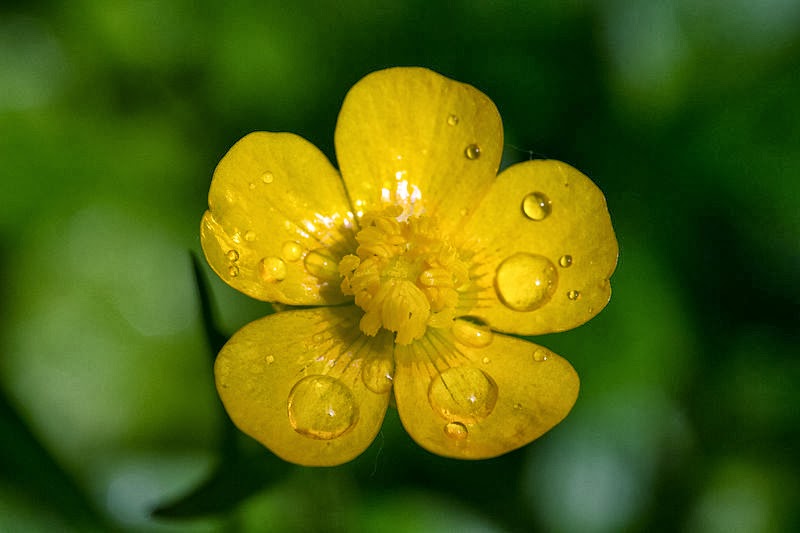
3. Crow's foot (buttercup, ranunculus) is supposed to be good for blisters and can be used to treat asthma if made into a tea.


Creeping Buttercup: Photo by Laura Brolis, Wikimedia Commons

4. Canada Snakeroot (asarum canadense) has a "spicy" flavor and was used to treat catarrh, cough, colds, scarlet fever and lung complaints, such as tuberculosis. It must be said, however, that it is now known to contain a carcinogen.
Asarum canadense: Photo by Chris S. Packard, Wikimedia Commons


5. Comfrey (comphrey, knitbone, boneset) is still used today, and I can actually vouch for the authenticity of this one when used to treat burns. It is also supposed to heal with healing fractures, various skin ailments, bruises, wounds and sprains. Either create a poultice with honey and oil and place it directly on the wound or ailing part, or boil it down and use the extract, or have them drink it as a tea.
Syphytum officinale: Photo by Agnieszka Kwiecień, license: CC-BY 3.0


Well, that's all for now. Join me next time for URINE and its various uses.


Note: Most of these herbs were found in "The Ladies' Indispensable Companion and Family Physician" published in 1854. Another of the remedies for burns found in said book is to burn the inside sole of an old shoe and sprinkle the ashes on the wound...


Wednesday, August 28, 2013

Heart Healthy

"Above all else, guard your heart, for everything you do flows from it." Proverbs 4:23


Easy words to say. We know what it means to guard something, to lock it up tight behind walls of stone and ironwood gates and courtyards filled with strong-armed and well-armored men. But how does one go about guarding a heart. One's heart, in the non-organic sense, is not easily confined. Even if it were practical to lock ourselves in a tower, which I don't suggest, our hearts would by no means be safe. How do you guard something that is essentially metaphysical?


"Keep your mouth free of perversity; keep corrupt talk far from your lips." Proverbs 4:24

Corruption spreads like bacteria in the blood, fast and hungry and surrounded by delicious things to eat. Bacteria are small, by themselves, they look harmless enough that we might not be able to tell the difference between the flesh-eaters and vitamin K-makers. So it is with corruption, and if we lack vigilance both can slip through cracks in the skin that protects and wreak havoc. The first step obviously then, it to keep them from getting inside.

"Experience teaches us that it is much easier to prevent an enemy from posting themselves than it is to dislodge them after they have got possession." - George Washington


Step I: 
Be careful what you allow yourself to take in. Don't let anything that carries a seed of corruption come inside, no matter how harmless is looks. (Anything by the way, means anything: books, television, speech, relationships, even thoughts, must be monitored for signs of infection and treated accordingly - a simple hand-washing will probably suffice for most things if you catch them in time James 4:8, but for those really tough jobs I suggest some serious knee-time and an industrial strength cleaner. Galatians 4:9, Proverbs 17:3)


"Let your eyes look straight ahead; fix your gaze directly before you. Give careful thought to the paths for your feet and be steadfast in all your ways. Do not turn to the right or the left; keep your foot from evil." Proverbs 4:25-27


Step II:
Follow through.

Yup, that's it. Decide what you need to do, and do it. Don't be distracted by all the shiny color and sparkle of culture. It's all plastic and plaster anyway. People will think you're strange. That's all right. They might even call you a prude. Heaven knows there are worse things you can be called (unsaved, unrepentant and wicked come to mind). By the way, the word prude is short for prude femme, meaning virtuous woman. Isn't it interesting how culture has taken something good and made it sound bad? Sounds like corruption to me.


Monday, August 26, 2013

The Homosexuality Issue is the not the Issue

Over the last few weeks, I found myself feeling increasingly uneasy, watching the unrest over the issue of homosexual marriage and homosexuality in general. As event unfold it's becoming more and more clear that in order for "everyone" to be free those who don't fall on the right side of this issue are going to be punished unfairly. And that is worrisome.

Then I realized what's going on here. Talk about smokescreens. This isn't about homosexuality; it isn't about marriage, abortion, slavery, genocide, or which version of the Bible you use. The issue is, as always, whether or not we as Christians are going to choose to act like Christ. That's it. Bottom line. God is control. Always. Our job is to share Christ's love with people.

I think personally, my job in the healthcare field has made part of this easier for me. In healthcare you don't discriminate. I've taken care of people who have done drugs while pregnant, who've been imprisoned for rape, who've tried to commit suicide, who are transgender or homosexual, who are alcoholics.... And it doesn't matter. You treat the person in front of you, and you don't judge them or look down on them, because if you did, you wouldn't be able to do the job.

That's the way it should be in our Christian lives. Treat the person in front of you. Love them as the circumstances call for it. I'm not saying you should tell them what they are doing is right. I don't tell patients who use drugs that they are okay to keep on doing drugs. It is going to kill them, and I have a responsibility to warn them of that. But people should learn to care about your opinion, because they care about you, which happens when you invest time into them. It doesn't work the other way around. No one says, "I really respect that outspoken opinion that was thrown at me like a dart, maybe I should get to know that person."

My point being, don't let what society says is the issue confuse you about what you need to be doing. God has already told us what is required. He didn't tell us we were responsible for fixing the world. He didn't tell us we had to run the country the way we want it run. Just imagine if we didn't live in a democracy. If we lived in a dictatorship where these issues weren't even up for a vote, how would that change how we act and think? The ideal answer would be that it wouldn't change our actions at all.


1 Corinthians 13:1-3, 13 (ESV): If I speak in the tongues of men and of angels, but have not love, I am a noisy gong or a clanging cymbal. And if I have prophetic powers, and understand all mysteries and all knowledge, and if I have all faith, so as to remove mountains, but have not love, I am nothing. If I give away all I have, and if I deliver up my body to be burned, but have not love, I gain nothing...so now faith, hope, and love abide, these three; but the greatest of these is LOVE.


Tuesday, July 16, 2013

On Women

Recently, I started reading Seven Men and the Secret of Their Greatness by Eric Metaxas. For those of you unfamiliar with this author, he wrote biographies on both Dietrich Bonhoeffer and William Wilberforce. In the introduction to his latest book, Metaxas brings up the ideas of what culture today says about manhood. He writes that "we live in a culture where strength is feared and where there is a sense that--to protect the weak--strength itself must be weakened....It leads to a world of men who aren't really men. Instead they are just two kinds of boys: boasting, loud-mouthed bullies or soft, emasculated pseudo-men" (xx). Metaxas points out that manhood as God designed it is the selfless use of men's greatest gift from God, their strength, to protect those who are weaker. I agree whole-heartedly with this statement and think a great many of societies evils could be cured if men chose to use their strength in this way.

Reading this introduction, however, led me to wonder what God's greatest gift to women might be. I would like to set forward women's ability to use words, especially speech, as one of the main talents God has provided the fairer sex. And, just as men's talent has been perverted by culture, I think women's talent has been tainted as well. 

Allow me to explain. We are repeatedly told in the New Testament to use our words to encourage each other to good works, to build each other up and to show respect to the men in our lives--most especially husbands. But I see women all the time who use their words to purposefully disintegrate relationships, whether those are relationships with other women or men. Rather than using their talent for words, especially spoken words, to help, they are used as swift stabbing weapons, and whoever can think faster is the "winner" of the verbal warfare. As everyone knows, the old adage about sticks and stones could not be more untrue. Words can leave wounds that gape and fester for years, even a whole lifetime, after the actual injury is done. I could go on and on in this subject, talking about the prevalence of gossip and spreading of malicious rumors that seem to be the topic of so many television shows geared toward a teenage female audience, which I find horrifying and sad for so many reasons, but my main point is simply this: women have a God-given talent. Just as men should use their strength to protect the weak even to the point of self-sacrifice, women should use their talent to honor and encourage and bring life back into relationships. These talents are two complimentary sides of a coin. The loss of one leads to the downfall of the other. So let me encourage you women out there to use what you have been given for good. Write a note. Send an email or text or telegram if you have to. Tell someone you love them. Tell them they are important and special and that you are glad to have them in your life. Tell them you respect them...and then, act on what you say.


----

Metaxas, Eric. Seven Men and the Secret of Their Greatness. Nashville: Thomas Nelson, Inc., 2013.

Summer Reading List

For those who are always looking for new books to read here are a few recommendations from some of my favorite authors:

1. Pathfinder/Ruins by Orson Scott Card : 
         A far-future sci-fi series about the expansion of the human race to another planet. It's written for young adults but thoroughly enjoyable for a more advanced reader as well.

2. The Wind Through the Key Hole by Stephen King : 
        An addition to his infamous Dark Tower series, this is a tale within a tale within a tale that occurs during the events of the main series. If you were a fan of the series, you should enjoy this.

3. Dodger by Terry Pratchett :
       This novel has much of the humor and flavor of the Discworld series while holding to the setting of Victorian London.

4. Worldshaker/Liberator by Richard Harland :
       Steampunk science fiction for young adults that focuses on the strict class differences aboard the mobile city, Worldshaker.

5. Behemoth/Leviathan/Goliath by Scott Westerfeld :
       Another steampunk science fiction trilogy that begins at the onset of an alternate version of World War 1. I highly recommend this series as well as his Uglies series.

6. Reckless/Fearless by Cornelia Funke :
       A new fantasy series from the author of the Inkheart trilogy. Jacob Reckless is a hunter of fairy-tale artifacts in "the world behind the mirror," but finds himself in trouble when his brother follows him.

7. The Yard/The Black Country by Alex Grecian :
      These novels follow the cases of Detective Walter Day of the Scotland Yard Murder Squad after the infamous Jack the Ripper has disappeared from the streets.

8. The Affinity Bridge/The Osiris Ritual/The Immorality Engine by George Mann :
       Fans of steampunk should definitely give these a read. Newbury and Hobbes, working for Queen Victoria, whose life has been extended indefinitely by a monstrous version of life-support, hunt down the occult in London.

9. Portlandtown by Rob DeBorde :
       Zombies and a little voodoo mixed with northwestern American mythology.

10. The Complaints by Ian Rankin :
        A twist on the normal police/detective fiction involving Malcom Fox of "The Complaints", the Internal Affairs of Britain's police force.

11. Rot & Ruin by Jonathan Maberry:
       Zombies and a coming of age with an interesting message : "Zombies were people, too."

12. The Eyre Affair (Thursday Next #1) by Jasper Fforde :
        Time-travel, a literary detective agency, a master villain...This series moves so fast, it'll be hard to keep up if you aren't paying attention. You'll probably enjoy this series if you have a prolific knowledge of the classics, such as Jane Eyre, Great Expectations, Hamlet and more.


Tuesday, July 9, 2013

Three Personalities

"In the late 1940's, WH Auden became enamored of the idea that every writer's mind is a household containing three personalities. T.S. Eliot's, he wrote, included an Archdeacon, an old peasant grandmother and a young boy who liked to play practical jokes." - Adam Kirsch


I came across this quote as a writing prompt and decided to try my hand at it. I think there are far more than three floating around in here, but these are the top three personalities that I find myself writing into every story without conscious decision to do so.


LadyAmadeus' Household

1. The Flawed Hero
This is the protagonist who strives and strives for perfection even while making, sometimes extremely destructive, mistakes. He uses his strength (or sometimes weakness) to protect others as best he can while being singularly unconcerned for his own safety and well-being. This is a growing role. Flawed men turn into Heroes throughout the course of the story. And, yes, it usually is a "he," because in my own opinion females are far too complicated for this role (but this is an entirely different subject and may appear in another post at length, so we'll leave it to rest for now).


2. The Misunderstood Villain
My favorite is the misunderstood villain, because, if you are willing to let him, he can unearth a level of empathy that a hero is simply incapable of evincing. It requires the realization that everyone has their own reasons for doing what they do. Very rarely do people set out just to be evil. There are extenuating circumstances. There are turning points and cruxes and opportunities for change. The degree of separation between this villain and the hero can sometimes be as small as a single moment of decision, but that decision was shaped by a past, which is what I'm interested in. I myself am very rarely a hero, even a flawed one, but I do like to think that if I ever play the part of a villain it's simply because my actions are being misunderstood.


3. The Younger Brother
This is the one who desires more than anything else to make others proud of him, to make them acknowledge his skills and ability, and to live up to a standard that was set by someone, usually older and more skillful, going before him. The younger brother is useful in that jealously and unreasonable decisions as well as labile mood are completely in character. You still love him and want him to grow up well, but sometimes, he's simply maddening.