Featured Post

Prayer for Focus in Spiritual Battles

Prayer for Focus in Spiritual Battles Psalm 36:5-12; Psalm 38:1-6; Ephesians 6; Hebrews 12:28-29 Father God,    I come before you in prayer ...

Showing posts with label Medicine. Show all posts

Saturday, May 24, 2014

Soul-honey

Proverbs 24:13-14
My son, eat honey, for it is good, 
and the drippings of the honeycomb 
are sweet to your taste.
Know that wisdom is such to your soul; 
if you find it, there will be a future, 
and your hope will not be cut off.


This passage caught my attention today. Partly because I think "soul-honey" is an awesome word combination. I also did a little research. It turns out that honey isn't just a tasty treat. When applied to wounds as a balm, honey acts as a slow-release form of hydrogen peroxide, preventing infection--without the burn of pure hydrogen peroxide. It also has antioxidant and anti-inflammatory effects. Of course, none of this was known when this verse was written. I love finding out how the Bible proves it can be trusted in even the smallest ways.

It isn't a great leap to carry the metaphor to wisdom and the soul. Wisdom is antibacterial in that keeps organisms that start out small like greed, lust and anger from taking root and growing into great infections. It is also antioxidant in that it prevents slow, unnoticed decay of plain, seemingly harmless laxness that can ultimately lead to cancerous growths. Finally, wisdom is anti-inflammatory in its effects. "Good sense makes one slow to anger, and it is his glory to overlook an offense." Prov. 19:11

Having decided that wisdom is definitely worth finding: where to find it? We don't exactly have wisdom-combs (wisdom-hives?) hanging from every tree--or actually any that I know of, but Job 28 has a great poetic description of trying to find wisdom, and I would highly recommend reading the whole thing. These, however, are the highlights. Verses 12-15 state, "But where shall wisdom be found? And where is the place of understanding? Man does not know its worth, and it is not found in the land of the living. The deep says, 'It is not with me,' and the sea says, 'It is not with me.' It cannot be bought for gold, and silver cannot be weighed as its price." It seems someone who is genuinely seeking this miracle cure for the soul might at this point start getting worried. Fortunately, Job doesn't leave us hanging for long. Verse 23 says, "God understands the way to it, and he knows its place." And the chapter ends with, "Behold, the fear of the Lord, that is wisdom, and to turn away from evil is understanding."

Proverbs also has a lot to say about wisdom, often using a female personification to show what wisdom is and what it decidedly is not. Getting wisdom isn't always easy. Just as getting honey from a beehive isn't easy. It takes preparation, dedicated study and the right tools, but it is definitely worth the effects.


Photo courtesy of Vards Uzvards


Thursday, October 24, 2013

Medicinal Herbs for Fictional Use, Part 2


1. Urine, that wonderful liquid gold.
Splash, photo by Pro2


Urine has had many uses in history and in historical medicine, everything from being used as a face wash to tanning hides to a detergent for tough stains. Urea, a main component of urine, is used in many beauty products today that are used to treat dermatological conditions like psoriasis and eczema. Urea can also dissolve the nail plate of an infected or overgrown nail without damaging the healthy tissue.

Now, depending on your fiction world, urine might very well be the most aseptic liquid available. Urea, a component of urine, can debride wounds by breaking down the dead tissue. If it came right down to it in a survival situation, I would probably go with urine over alcohol for a large wound since alcohol kills all tissue, both healthy and non, and the urine of a healthy person probably contains less sugars and odd yeasts than your fermented beverage of choice.

On a side note, urine is supposed to be a wonderful fertilizer so if you have a compost pile of your own...

2. Mullen (Mullein Root, Wild Ice Leaf, Hag's Taper, Candelaria) is still proclaimed today to be a wonderful cure for things like ear infection and respiratory disorders. Historically, the leaves steeped in vinegar were used to treat lameness and internal bruises as well as respiratory congestion. Do note that the hairs on the leaves can cause contact dermatitis, so people shouldn't be picking them without gloves. The flowers are used to create a wash for minor wounds and abrasions.


Mullein, photo by Schnobby
3. Lobelia inflata (Indian Tobacco) leaves and seeds were used dried, crushed and tightly bottled, made into a tea, tincture or pill. A few teaspoons were given at a time to treat asthma, whooping cough, difficulty breathing, consumption, cholera, lockjaw, rabid animal bites, wasp or poisonous insect stings and, surprisingly, hydrophobia. Lobelia is toxic in large doses and does tend to cause vomiting indicating that the dose needs to be titrated according to response.
Lobelia inflata, photo by H. Zell


4. Knotgrass (Polygonum Aviculare) extract was used for nose and gastric bleeding. When powdered it was drunk with wine to treat poisonous bites. And was in general considered to be a remedy for gangrene, ulcers, broken joints and dysentery.
Common Knotgrass, photo by Aiwok
5. Foxglove (Digitalis Purpurea) was first documented for use in cardiac issues in the late 1700's and contains a strong cardiac glycoside that slows and strengthens the heartbeat. I can't see a reason any character in any of my stories would conceivably use this as it deals more with a chronic condition than an actual disease process. But I found it interesting so I'm including it anyway. Honestly, it would, in fiction land only of course, be more useful as a poison. Overdose of foxglove causes visual disturbances (yellow-green halos around lights), vomiting, dizziness, seizures and ultimately death as it stops the heart.
Digitalis Purpurea, photo by Kurt Stüber

Well, that's it for this section. This is, of course, in no way comprehensive, but I hope it has helped to imbue a modicum of historical accuracy to your literary endeavors. Happy writings, everyone!

Tuesday, October 8, 2013

Medicinal Herbs for Fictional Use

For those of you writing either historic novels, or novels where such wonders as penicillin and morphine have yet to be discovered, you may be wondering what you can use to help your ailing characters without just throwing random (or made-up) herbs into a poultice. So here is a list of herbs used in the 19th century for various ailments. 

As a disclaimer, this is not sound medical advice for real world people living in the 21st century, so please do not try any of these remedies on yourself without doing some thorough research of your own.


1. Chocolate Root (purple avents, geum rivale) can be used to treat fever, consumption and sore throat. Mix about twenty grains of the powder with honey. Take every day. Can also be made into a tea.
Indian Chocolate: Photo by Jeffdelonge , Les Verrières de Joux, France, mai 2005

 2. Bloodroot (sanguinaria canadensis, bloodwort) is used for fever, wound cleaning, cough and croup, dental hygiene, and, in those cases where it is desirable, to cause vomiting. The underground part of the stem (rhizome) was used for medicinal purposes. Dosing is not specified. However, if taken orally it is an emetic (causes vomiting) or it can be placed directly on the skin around a wound to clean away dead tissue and reduce inflammation. Bloodroot may have some antibacterial and anti-inflammatory properties.


Bloodwort: CC-BY-SA-3.0/Matt H. Wade


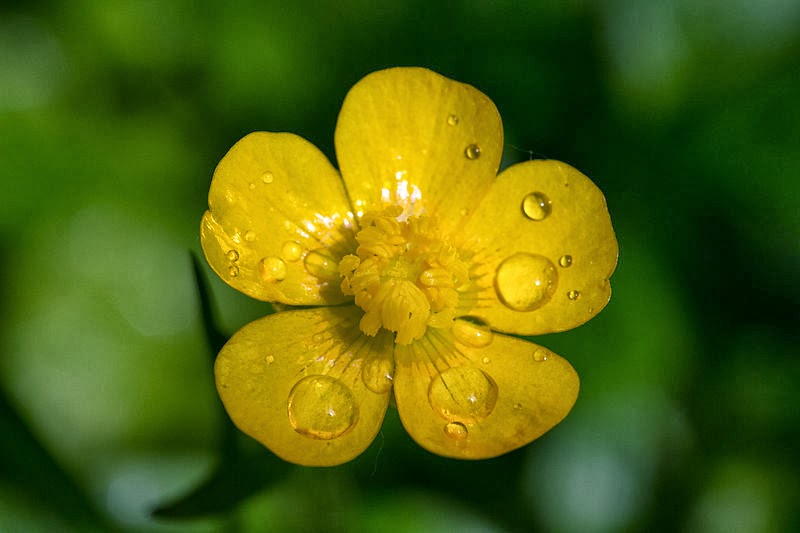
3. Crow's foot (buttercup, ranunculus) is supposed to be good for blisters and can be used to treat asthma if made into a tea.


Creeping Buttercup: Photo by Laura Brolis, Wikimedia Commons

4. Canada Snakeroot (asarum canadense) has a "spicy" flavor and was used to treat catarrh, cough, colds, scarlet fever and lung complaints, such as tuberculosis. It must be said, however, that it is now known to contain a carcinogen.
Asarum canadense: Photo by Chris S. Packard, Wikimedia Commons


5. Comfrey (comphrey, knitbone, boneset) is still used today, and I can actually vouch for the authenticity of this one when used to treat burns. It is also supposed to heal with healing fractures, various skin ailments, bruises, wounds and sprains. Either create a poultice with honey and oil and place it directly on the wound or ailing part, or boil it down and use the extract, or have them drink it as a tea.
Syphytum officinale: Photo by Agnieszka Kwiecień, license: CC-BY 3.0


Well, that's all for now. Join me next time for URINE and its various uses.


Note: Most of these herbs were found in "The Ladies' Indispensable Companion and Family Physician" published in 1854. Another of the remedies for burns found in said book is to burn the inside sole of an old shoe and sprinkle the ashes on the wound...